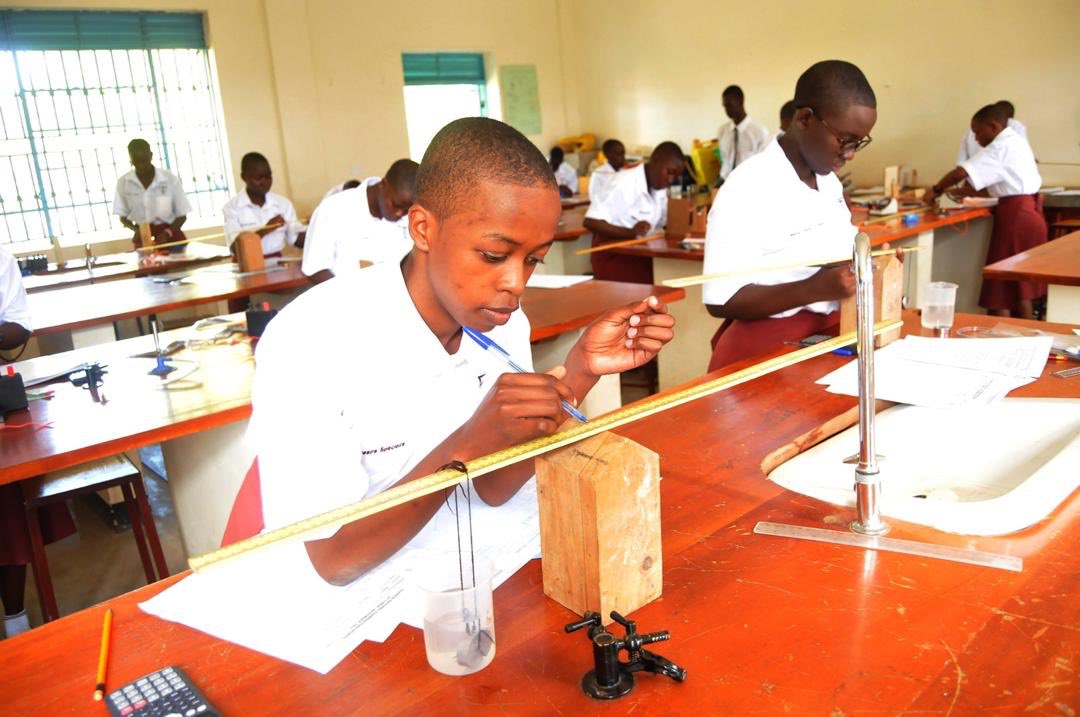
Combined, the original and additional UgIFT financing will construct, equip and staff at least 259 new secondary schools. An estimated 1,000 existing primary schools will receive development grants to refurbish and equip their facilities to provide better learning environments and meet basic standards. Laboratories will be constructed in secondary schools that do not have them. A total of 14,000 primary and 1,400 secondary school teachers will be recruited in the least-staffed districts to enable them to meet minimum school staffing levels. Additional inspectors will be recruited to meet a ratio of 1 inspector to 40 schools. Grants for primary and secondary schools will enable schools to make instructional materials available to teachers and maintain facilities based on student populations. In addition, financial incentives linked to school performance will be tested and phased in.
For micro-irrigation, up to 8,000 smallholder farmers in 40 districts will access matching grants to purchase and use micro-irrigation equipment, contributing to raising incomes and food security in rural areas through improved agricultural productivity and improving climate resilience of the poor and vulnerable farming communities.
UgIFT will also support the integration of delivery of services to refugees and their host communities in thirteen districts. In doing so, refugee populations will be factored into allocation formulae, and UgIFT will support the transition from humanitarian financing to integrated financing of service delivery for refugees and their hosts together with services already managed by LG.
“The combination of the additional funding for local governments, the program’s deepened focus on service delivery and performance, the extension of the program to include to water and micro irrigation, and the integration of service delivery for refugees and their hosts provides a unique opportunity to revitalise local government service delivery across Uganda” said Tim Williamson, Senior Public Sector Specialist and World Bank’s Task Team Leader for the project.
The UgIFT program complements other investments by the World Bank Group in Uganda supporting the IFTRP, including the Uganda Support to Municipal Infrastructure Development Program (USMID) which is financing urban development in municipalities and service delivery investments in refugee hosting LGs via the Discretionary Development Equalization Grant (DDEG).
World Bank Program in Uganda
The World Bank Group, one of the largest sources of funding and knowledge for developing countries, has provided more than $10 billion in financing to Uganda since 1963. The Bank’s current portfolio in Uganda comprises 24 operations for a total commitment of US$2.8 billion.
* The World Bank’s International Development Association (IDA), established in 1960, helps the world’s poorest countries by providing grants and low to zero-interest loans for projects and programs that boost economic growth, reduce poverty, and improve poor people’s lives. IDA is one of the largest sources of assistance for the world’s 76 poorest countries, 39 of which are in Africa. Resources from IDA bring positive change to the 1.6 billion people who live in IDA countries. Since 1960, IDA has supported development work in 113 countries. Annual commitments have averaged about $21 billion over the last three years, with about 61 percent going to Africa.
PRESS RELEASE NO:2020/040/AFR
Contacts
Kampala
Sheila C. Kulubya
skulubya@worldbank.org